
What Is a Heat Pump? A Practical Guide for Commercial & Multi-Unit Buildings
With rising energy costs and growing interest in high-efficiency building systems, many commercial property owners and condo boards are exploring heat pumps as a modern alternative to traditional heating and cooling equipment. But what exactly is a heat pump — and how does it benefit commercial and multi-unit environments?
Here’s a clear, professional breakdown.
What Is a Heat Pump?
A heat pump is a high-efficiency mechanical system capable of both heating and cooling a building. Rather than generating heat through combustion, a heat pump moves heat from one place to another, making it significantly more energy-efficient than conventional furnaces, boilers, or electric resistance heating.
For commercial properties, this efficiency translates into lower operating costs, reduced emissions, and more stable year-round comfort.
How Heat Pumps Work (Commercial Overview)
Heat pumps operate using refrigerant and compression technology to transfer heat in or out of a building.
1. Heating Mode
-
Even in cold weather, heat remains present in the outdoor air.
-
The heat pump extracts this heat and compresses it to a usable indoor temperature.
-
The warmed refrigerant delivers heat through the building’s distribution system.
2. Cooling Mode
-
The heat pump absorbs heat from inside the building.
-
It transfers that heat outdoors.
-
The building cools efficiently — similar to an air conditioner, but with greater control and efficiency.
This ability to reverse operation makes heat pumps one of the few true year-round comfort solutions.
Understanding COP (Coefficient of Performance)
A heat pump’s efficiency is measured by its Coefficient of Performance (COP) — the ratio of energy output to energy consumed.
Example:
A COP of 3 means one unit of electrical energy produces three units of heat.
Modern commercial-grade heat pumps often achieve COP ratings between 3 and 4, dramatically outperforming conventional heating systems, especially during shoulder seasons.
Higher COP = lower energy bills + better long-term operating costs.

Heat Pumps in Alberta: Built for Cold Climates
Thanks to major advancements in HVAC technology, heat pumps are now a strong option even in Alberta’s winter conditions.
Cold-Climate Performance Includes:
Advanced Refrigerants – formulated to maintain heat-transfer efficiency at low outdoor temperatures.
Variable-Speed Compressors – automatically modulate output to maintain consistent heating without spikes in energy use.
Cold-Climate Heat Pump Models – engineered specifically for sub-zero performance common throughout Alberta.
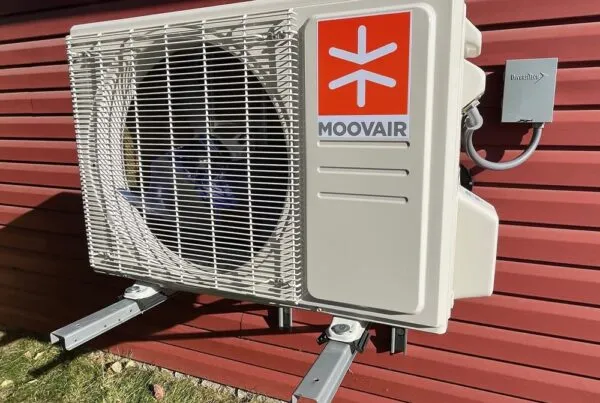
As an authorized Moovair Dealer, Avria Mechanical installs systems designed for reliable operation even during extreme cold snaps.
Why Commercial and Multi-Unit Buildings Are Choosing Heat Pumps
1. Major Energy Savings
Heat pumps move heat rather than create it, significantly reducing electricity or natural gas consumption.
2. Reduced Carbon Emissions
Electrified heating systems support sustainability goals and help buildings prepare for future emissions-based regulations.
3. One System for All Seasons
Heat pumps replace or supplement:
-
furnaces
-
boilers
-
air conditioners
-
electric heaters
…reducing equipment redundancy and maintenance complexity.
4. Increased Comfort and Control
Variable-speed, inverter-driven heat pumps deliver more stable temperatures, improved humidity control, and quiet operation.
Conclusion
Heat pumps are no longer just a residential upgrade — they are a strategic mechanical investment for commercial and multi-unit buildings across Alberta. With strong performance in cold climates and significantly improved energy efficiency, they offer a future-proof, environmentally responsible alternative to traditional heating systems.
If your property is evaluating an HVAC upgrade, a heat pump system may be an ideal solution for long-term comfort and operational savings.