
Why Proper HVAC Filtration Is Critical for Commercial Building Performance
In commercial, industrial, and multi-residential buildings, HVAC filtration plays a far more important role than many property managers realize. While filters may seem like small, inexpensive components, they’re one of the most critical elements in maintaining system efficiency, indoor air quality, and long-term mechanical reliability.
At Avria Mechanical Services Ltd., we routinely see how neglected filtration contributes to avoidable breakdowns, inconsistent airflow, and poor building performance. Here’s why proper filtration should be a priority in every facility.
1. Filtration Protects Indoor Air Quality
Every commercial HVAC system constantly circulates air through occupied spaces. Without proper filtration, airborne contaminants such as:
-
dust and particulates
-
pollen and allergens
-
mold spores
-
fibers and debris
-
workplace pollutants
…can circulate freely throughout the building.
A high-quality, properly fitted filter prevents these contaminants from entering the airflow, supporting:
-
healthier indoor environments
-
improved occupant comfort
-
reduced allergy and respiratory irritation
-
better overall tenant satisfaction
For multi-unit and commercial buildings, air quality is not just a comfort factor — it directly affects productivity, customer experience, and regulatory expectations.
2. Clean Filters Improve System Efficiency
Airflow is the lifeblood of any HVAC system. When filters are clogged or saturated, airflow becomes restricted — forcing fans, blowers, and compressors to work harder.
This leads to:
-
increased energy consumption
-
inconsistent temperature control
-
higher operating costs
-
accelerated wear on motors and mechanical components
In large commercial systems, even a small reduction in airflow efficiency can significantly impact utility costs and system performance. Clean filters ensure the HVAC system runs at its designed capacity with minimal strain.
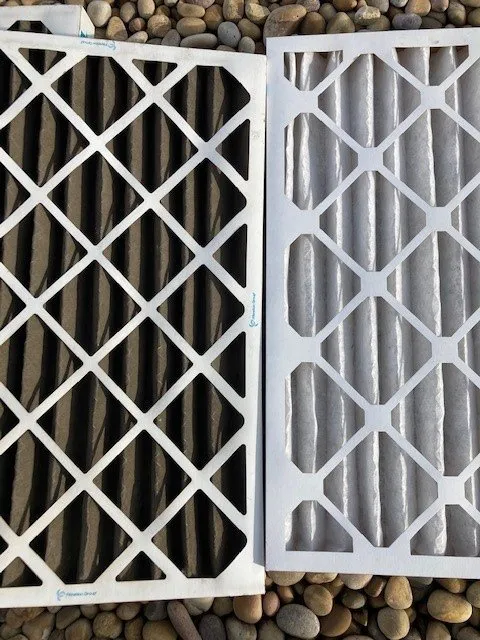
Comparison between a clean filter and a dirty filter.
3. Reduced Downtime and Fewer Mechanical Failures
A neglected filter doesn’t just reduce efficiency — it directly contributes to unexpected system failures.
Dirty filters cause:
-
overheating
-
coil fouling
-
blower motor stress
-
sensor issues
-
reduced airflow triggering safety shutdowns
These small issues quickly escalate into costly repairs or emergency callouts. For facilities where uptime is essential — multi-unit buildings, retail spaces, office towers, industrial shops — consistent filtration maintenance significantly reduces unplanned disruptions.
4. Filtration Is One of the Lowest-Cost, Highest-Impact Maintenance Tasks
Compared to other operational expenses, filter replacement is extremely affordable. Most commercial filters can be changed in minutes, and the return on investment is immediate through:
-
lower utility bills
-
fewer breakdowns
-
reduced component wear
-
improved indoor climate control
A simple filter change today can prevent hundreds or thousands of dollars in repairs tomorrow.
Conclusion
Filtration may be a small component, but it has an outsized impact on the overall performance of your HVAC system. For commercial, industrial, and multi-residential buildings, clean and properly maintained filters protect mechanical equipment, improve energy efficiency, and support a healthier indoor environment.
As part of a structured Preventative Maintenance Program, filtration plays a critical role in extending system life and reducing operational costs.
Don’t overlook the simplest — and most cost-effective — tool for protecting your facility’s mechanical infrastructure.